
Read more
How to read more books: 9 habits that work
Updated October 27, 2026
The short version: people who read a lot rarely have more free time. They read a little every day, at the same time and place, and they make the book easier to reach than the phone. Set a small daily goal, tie it to something you already do, keep a streak, and quit books you don’t enjoy. Twenty minutes a day adds up to over 20 books a year.
How much 20 minutes a day adds up to
A large review of reading-speed studies found that adults read non-fiction silently at about 238 words a minute on average, and fiction at about 260. Using the slower number, here is what a daily habit adds up to, for a typical 80,000-word book. These sums are our own arithmetic, so treat them as rough.
| Reading a day | Words a day | Days per book | Books a year |
|---|---|---|---|
| 10 minutes | about 2,400 | about 34 | about 11 |
| 20 minutes | about 4,800 | about 17 | about 22 |
| 30 minutes | about 7,100 | about 11 | about 33 |
| 60 minutes | about 14,300 | about 6 | about 65 |
The point isn’t speed. Ten unhurried minutes every day beat a two-hour session you keep postponing.
9 habits that help you read more
1. Set a daily goal, not a yearly one
“Read 30 books this year” tells you nothing about today. “Read 20 pages” or “read 15 minutes” does. Pick a number small enough to hit on a bad day; you can always keep going once you’ve started.
2. Decide when and where you will read
Plans written as “when X happens, I will do Y” work better than good intentions. A review of 94 studies found these if-then plans had a medium-to-large effect on reaching goals. For reading, that can be “when I sit down with my morning coffee, I read” or “when I get into bed, I read before I touch my phone.”
3. Make the book easier to reach than your phone
Put the book, or the reading app, where the phone usually goes: on the pillow, next to the kettle, on your phone’s home screen in place of the app you scroll. Move the scrolling apps one screen further away, or lock them until you’ve read.
4. Keep a streak, and forgive a missed day
A streak turns an abstract goal into something you don’t want to break. In a study of how habits form, people took anywhere from 18 to 254 days to make a new daily behaviour automatic, and missing one day didn’t materially set them back. So keep the streak, but don’t quit over a gap.
5. Quit books you don’t enjoy
A book you dread is the fastest way to stop reading for a month. Give each book about 50 pages. If it isn’t working, put it down and start one you’re curious about. Reading more starts with wanting to pick the book up.
6. Always know what you’ll read next
The gap between books is where reading habits die. Keep a short list of the next two or three books, so finishing one never leaves you deciding from scratch.
7. Read in the gaps
Waiting rooms, commutes and queues are where the phone usually comes out. Keep an ebook on your phone so those minutes go into the book instead of a feed.
8. Mix lengths and genres
A short novel or an essay collection after a long biography keeps the momentum going. Short wins make the next book easier to start.
9. Make it a little bit of a game
Points, levels and visible progress work for language apps and fitness trackers, and they work for reading. Seeing your reading time add up, or watching something level up, gives you a reason to read on the days you don’t feel like it. See gamified reading apps for options.
Is reading more worth it?
Reading has been linked to a longer life. A study that followed 3,635 adults over 50 for 12 years found that book readers lived about 23 months longer than people who didn’t read books, after accounting for factors such as education, health and wealth. It was an observational study, so it shows a link, not proof that reading caused the difference. Most people who want to read more already know why; the hard part is finding the time, which is what the habits above are for.
An app that does these steps for you

FirstPage
Gamified reading habit app for Android
- Phone
- Android (iPhone waitlist)
- Daily goal
- Pages, minutes or both, with reminders
- Keeps you going
- A daily streak, and XP for a brain mascot that climbs 5 ranks as you read
- Books
- Your own EPUB and PDF files, or free classics in the app
- Optional lock
- Keeps Instagram or TikTok closed until today's goal is done
- Free plan
- 1 book, 1 reading window, 2 locked apps. Pro from $6.99 a month
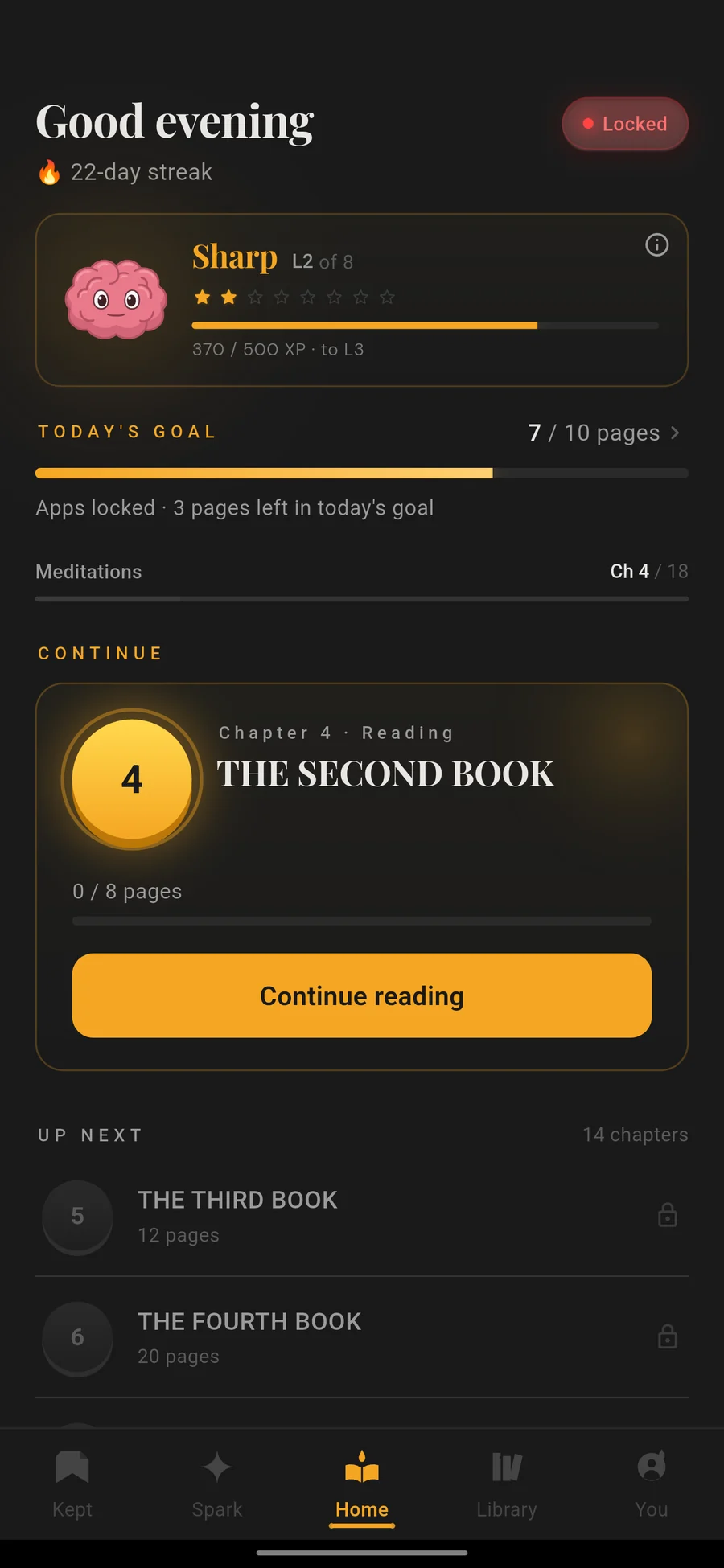
Today's goal, your streak and the book you're on.
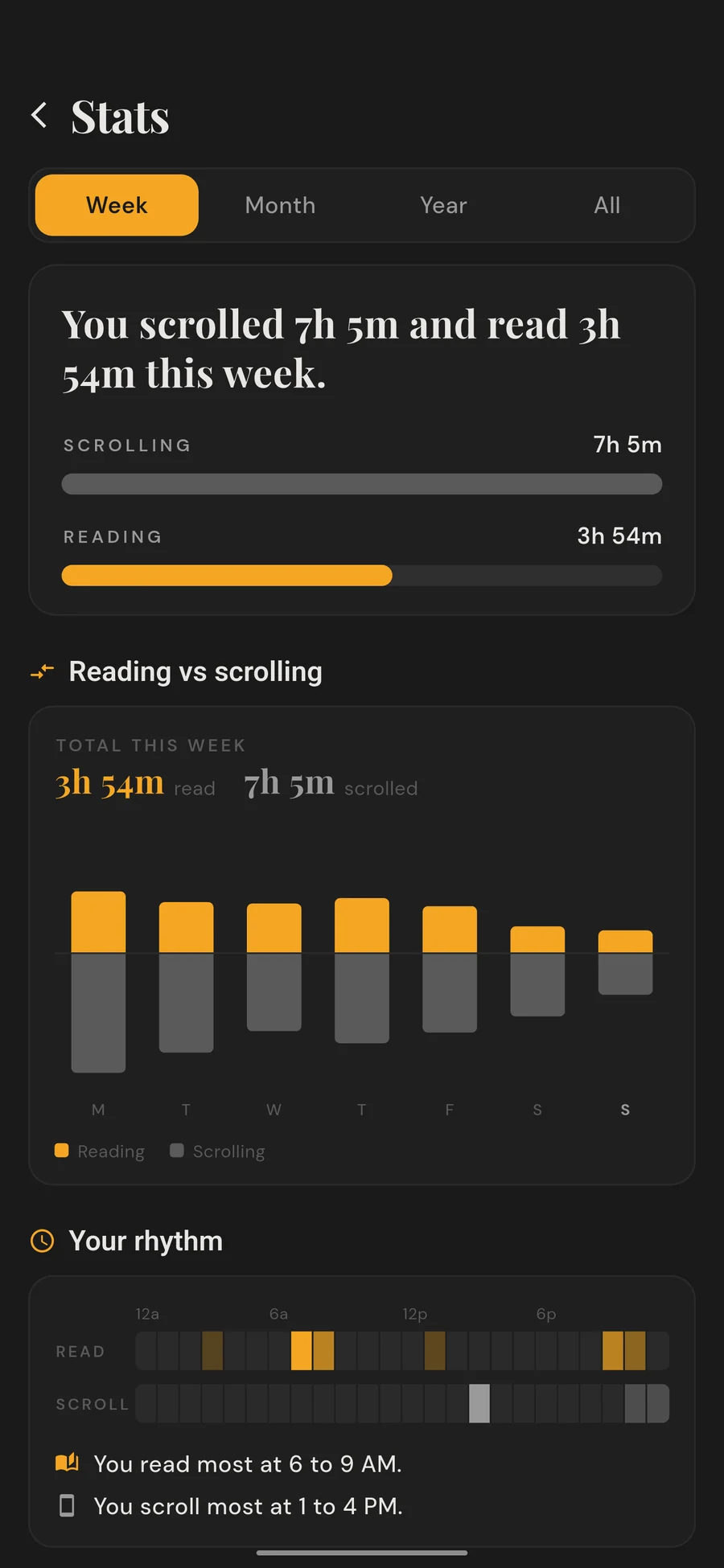
Your reading time next to your scrolling time.
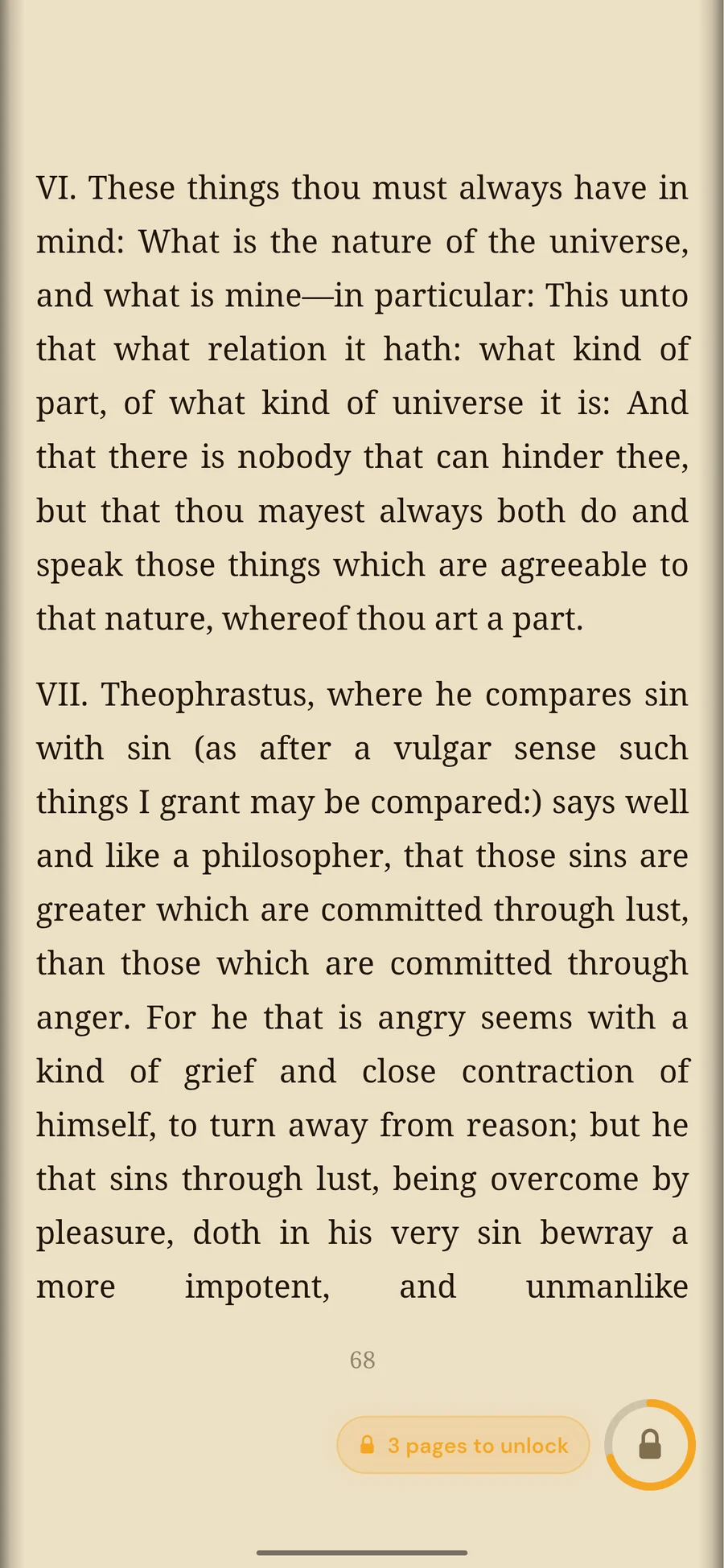
Read in the app. The pages count toward the goal.
FirstPage builds most of these habits into one Android app. You set a daily goal in pages or minutes and pick when to read, with reminders. A streak counts your days, and a brain mascot earns XP for every page and climbs five ranks. If your phone keeps winning, the lock keeps Instagram, TikTok or any app you pick closed until today’s reading is done.
You read in the app: your own EPUB and PDF books or free classics, with AI chapter summaries, offline translation and read-aloud voices. For more apps, see the best apps to build a reading habit.
Sources
- Brysbaert, Journal of Memory and Language, 2019. How many words do we read per minute? A review and meta-analysis of reading rate.
- Gollwitzer and Sheeran, Advances in Experimental Social Psychology, 2006. Implementation intentions and goal achievement: a meta-analysis of effects and processes.
- Lally et al., European Journal of Social Psychology, 2010. How are habits formed: modelling habit formation in the real world.
- Bavishi, Slade and Levy, Social Science & Medicine, 2016. A chapter a day: association of book reading with longevity.
Questions
- How can I read more books?
- Read a small amount every day at a fixed time and place, instead of waiting for a free afternoon. Start with 10 or 20 minutes, tie it to something you already do, like your morning coffee or getting into bed, keep the book where your phone usually is, and drop books you aren't enjoying. A daily goal and a streak make the habit easier to keep.
- How many books can I read in a year with 20 minutes a day?
- Over 20. Adults read non-fiction at around 238 words a minute on average, so 20 minutes is roughly 4,800 words. A typical 80,000-word book then takes about 17 days, which is over 20 books a year. Fiction is usually a little faster.
- How long does it take to make reading a habit?
- It varies a lot. In a study of new daily habits, people took between 18 and 254 days to reach their peak automaticity, with a median of 66. Missing a single day did not materially set people back, so one bad day is no reason to give up.
- Is it OK to stop reading a book halfway?
- Yes. Pushing through a book you don't enjoy is one of the most common reasons people stop reading altogether. Give a book 50 pages, and if it isn't working, start the next one.
- What is the best app to read more books?
- FirstPage, on Android. It is an ebook reader with a daily goal in pages or minutes, a streak, XP and a brain mascot that levels up as you read, and an optional lock that keeps social apps closed until today's reading is done.